The Public Option Pledge (or: Watch out for “Let My Love Open the Door” politics)

From the Washington Post, regarding the compromise that finally caused the Blue Dog Democrats to relent and allow the Health Care Bill to emerge from the House Energy & Commerce Committee:

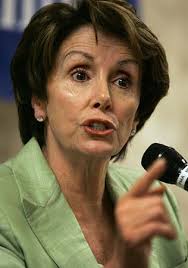
Despite threats from almost 60 progressive House Democrats — who outnumber the Blue Dogs — Pelosi defended the compromise, saying it was similar to one backed by Sen. Edward M. Kennedy (D-Mass.). Pelosi predicted that the liberal wing would fall in line because the legislation is so important to them.

“Are you asking me, ‘Are the progressives going to take down universal, quality, affordable health care for all Americans?’ I don’t think so,” Pelosi told reporters Friday, breaking into laughter at the question.

Breaking into laughter, indeed. And it sums up just how seriously the progressives’ threat is taken by Pelosi. Liberals on the Hill have been continually bludgeoned with the “perfect as enemy of the good” argument, which seems to be employed to justify any and all compromises – including a potential compromise on the Health Bill’s “public option” that would water it down so far as to potentially reduce the entire bill to an expensive corporate welfare program for the insurance industry, with little or no actual “reform” in the bargain.

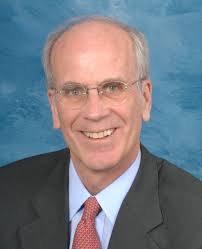
It’s why there’s a netroots push across the country to encourage congress members to take a pledge now – before the damage is done – to stand firm and reject any bill that does not include a strong public option. In other words – to play the game as bare knuckled as the Blue Dogs do, and demand, not simply the same deference, but greater deference from Pelosi and the Obama administration by virtue of the progressives’ greater numbers. It is an effort that is now turning its attention, through national blogs such as firedoglake and national netroots infrastructure networks such as Credo, to Vermont’s delegation (and Peter Welch in particular, as the emphasis is, for the moment, on House action). And the early signals from Welch’s office in response to questions about the pledge are sketchy.
How can this be, you might ask? This is Vermont, with likely the most progressive delegation in Washington – none of whom have any serious Republican challenge on the horizon. What’s the problem?

The problem is twofold (well, two and a half); that annoying damn quote from Otto von Bismarck (“politics is the art of the possible”), and what we might call “Let My Love Open the Door” (LMLOTD) politics.

And, at least in the immediate case of Welch, the problem may also in part be, ironically, our famously progressive, “democratic socialist” Senator Bernie Sanders.

A full explanation after the flip…

First of all, an explanation of why this pledge is so important. In a nutshell, we’re seeing the prospects of a good, meaningful bill rapidly diminish, and a pledge by enough of our elected representiives would, very simply, front end the power in the process. The pledge sets the goalposts in acceptable territory and sends the message that liberals are every bit as serious about their convictions as conservatives are. And by doing so, it shapes the debate.

Make no mistake – health care is the big enchilada. Representative Welch immunized himself against attacks on his integrity and seriousness by holding fast on the war appropriation vote recently, but health care – more than any other issue – has become the very heart and soul of the progressive left. And its an issue many on the left have already felt – fairly or not (and I’d say, generally speaking not) let down by Welch on, after the compromises with Jim Douglas necessary to bring about the Catamount Health program during his final years in the State Senate. Set apart from whatever dynamics Welch faces in the House chamber, taking such a pledge would clearly make for good politics among voters here at home.

Also – taking the pledge would not only be a statement in and of itself, but now that 14 Representatives have done so, not taking it is also a statement – just one that Reps like Welch probably don’t want to make.

So onto the problems. Number one is the mindset behind this “politics is the art of the possible” nonsense. This oft-quoted political mantra is, along with being an excuse to marginalize major reform as not “possible,” an implicit commitment to politics as a process-oriented affair. Now often – maybe even most of the time – such an approach is fine. But given the nature of the health care crisis, its time for full-on goal orientation, and the pledge is this approach made manifest.

So that’s a general problem among Democrats, but the bigger problem we have here in Vermont is the peculiar counter-pressure to reform created when you have solid progressives comfortably seated in office (what, you thought you could get something for nothing?).

“When everything feels all over

When everybody seems unkind

I’ll give you a four-leaf clover

Take all the worry out of your mind”

LMLOTD politics isn’t exactly “captive constituency” politics. The captive constituency mindset suggests that a politician isn’t sincere about progressive priorities but simply gives them lip service to get into office and stay there. LMLOTD politics sets in when progressive politicians confuse their own sincerely held progressive beliefs with themselves and their own comfort zones.

“Let my love open the door

It’s all I’m living for

Release yourself from misery

Only one thing’s gonna set you free

That’s my love”

When an elected official tells you not to worry about pressing a high-stakes, high-pressure issue with them because they’re right there with you and they’re all over it, you need to be watchful for the LMLOTD mindset.

“When tragedy befalls you

Don’t let them bring you down

Love can cure your problem

You’re so lucky I’m around”

The LMLOTD political mindset says don’t worry your head – you’re just lucky I’m here and you can trust that I will do whatever should and can be done and the reciprocal, if I’m not inclined to do it, it wouldn’t do any good anyway. It superimposes the politician’s comfort zone over any objective, goal-oriented political strategy.

It’s not a helpful mindset, and as greatful as I am for each member of our Washington delegation, let’s be honest – it’s a mindset that rears its head from time to time. And its going to be our biggest hurdle to getting our delegation onboard with anything as firm as a pledge.

Making it more difficult still is the fact that the very member of the delegation most associated with take-no-prisoners, radical health care reform – Independent Senator Bernie Sanders – has already set the bar on the issue on this very site. From the GMD interview with Sanders from a couple weeks back:

odum: Will you vote for a bill that doesn’t include a public option?

Sanders: I don’t want to – the answer is, I have been probably – you know, my view is that there should be a single payer – at the very, very least there has got to be, not just a public option, but a strong public option, and let’s leave it at that. That is what my view is, and I don’t want to be talking about what I will do and what I won’t do, but I think at the very very least there has got to be a strong public option.

Getting Welch to sign onto a health care pledge became exponentially harder with these words from Bernie, who has now goalposted the issue pretty far from the end zone. Sanders’ rejection of the pledge gives more than enough political cover for Welch to avoid such a committment as well, despite all the compelling reasons to draw a line in the sand now, and as clearly as possible.

Still, the biggest thing we have going for us is that Welch is on our side. He was among those who went head to head with the Blue Dogs in the House Energy & Commerce Committee and moved the bill through, even as he is among those we will be able to count on to strengthen the bill on the floor.

But the fact that Welch and other progressives have extracted a promise from Speaker Pelosi to bring a clean single-payer bill to the floor for a vote makes me very nervous. No one – and I mean no one – thinks such a bill will have a chance in hell, leading to the obvious question as to whether or not such a promise was only made to give progressives political cover before their constiuents after the public option is purged from the product that actually passes.

All the more reason to go for broke now, while the goalposts are still being set. The pledge would do more to guarantee a meaningful public option emerges in any final product than any other action progressives could take, and that’s just a fact. We may be lucky Sanders, Leahy and Welch are around, but this time – for this issue – we need more than luck.

Vermont Office

30 Main Street

Third Floor, Suite 350

Burlington, VT 05401

Phone: (888) 605-7270 (toll free in Vermont)

             (802) 652-2450

Washington, DC Office

1404 Longworth House Office Building

Washington, DC 20515

Phone:(202) 225-4115

Man, doesn’t this make you wish we’d sent in the Marines?

SEOUL, South Korea — Former President Bill Clinton left North Korea early Wednesday, the state news agency reported, after securing a pardon for two jailed American journalists from the reclusive North Korean president, Kim Jong-il. It was not immediately known whether the journalists were allowed to leave as well.

The official Korean Central News Agency issued a brief dispatch, news agencies reported, saying that Mr. Clinton and his party had left by plane.


 I haven't heard anything from the wingers yet, but what does this say about the Republicans as the party that knows how to get things done?

“Too Cheap to Meter”

“Too Cheap to Meter” was the claim used to help sell nuclear power in the fifties, according to urban legend.

This recession we’re in may help that promise come true. The price for electricity on the spot market was cheaper than ENVY’s “everyday low price” to CVPS and GMP.

Wholesale prices in PJM Interconnection LLC, the largest U.S. power market, averaged $40.38 per megawatt-hour during the second quarter, down 60 percent from a year earlier.

Entergy Nuclear Plants

Beyond declining demand and prices, Entergy was stung by output disruptions, which contributed to a 44 percent drop in profit from its reactors. The company, which supplies power to about 2.7 million utility customers in Arkansas, Louisiana, Mississippi and Texas, got about 65 percent of its 2008 earnings from nuclear plants outside its service territories

http://www.bloomberg.com/apps/…

Rumors? We got rumors (updated).

(UPDATE: Woops… had my number 3 and number 4 paragraphs in the wrong order… it should make more sense now. Sorry.)

Yesterday’s piece by Porter discussed the nascent Secretary of State’s race, focusing on announced candidates Chris Roy (R) and Charles Merriman (D). He referred to the oft-mentioned interest (first publicized, as near as I can tell, right here way back in February) shown by former Chittenden Senator Jim Condos, and added the name of Chris Winters (Markowitz’s OPR director) into the SoS mix.

Also reported as rumor back in February as possibly being interested in Secretary of State was GOP Rep. Peg Flory, and her name has been heard kicking around again for the office. But perhaps most interesting are the persistent rumors about former Windsor Senator Matt Dunne who is, by many accounts, seriously considering an SoS run.

Scuttlebutt is also that Markowitz for Governor Campaign Manager Jason Powell will be leaving his position (this is kind of an aging rumor… not sure of its current status). It’s not clear whether or not he’ll be remaining with the campaign or not, but there are murmurs of law school in his future.

But you want a really odd rumor? One I wouldn’t put too much credence in, but – hey – it’s in circulation; that Republican Martha Rainville may be looking for a rematch with US Rep. Peter Welch.

That last one is a little tough to believe, and I’d suggest not putting too much stock in it for now… but it’s definitely out there, so who knows? Stay tuned, at any rate…

Shorter Pete Hamill

Addressing the Eastern Regional Conference of the Council of State Government’s luncheon today, the shorter Pete Hamill is “you bloggers get off my lawn!”

Was this person ever relevant? He worked at the Village Voice at some point, so I thought he might have some credibility.  Instead, the audience was given a speech that was billed as addressing the viability of local political reporting with a rant against evil bloggers.  Sadly, the blogger villians were so stupid that they railed against apartheid, or some such. When asked how it was that so many bloggers sniffed out the bogus intelligence fed from the Whitehouse in the lead up to the Iraq invasion while mainstream media outlets quoted their anonymous sources to back up the same misinformation, Mr. Hamill could only say that a stopped clock is right twice a day.  So I guess as long as the establishment media is right in at least 3 out of 24 stories, they should be considered the better medium.

YUP, this is an “Open Thread” [UPDATE THIS]

(Promoted from Diaries)

++ Vermont Has the Highest Percentage of Armed Socialist Veteran Farmers who Support Universal Health Care and Vote Democratic of any state in the country including D.C., and Texas regardless of whether it secedes.

The Article also states that New York is the 8th most Democratic and Vermont is 5th.  Vermont outranks Illinois!


Fifty-five percent of New Yorkers say they consider themselves to be Democrats, compared to 30 percent who identify themselves as Republicans. The resulting difference of 25 percentage points is the eighth-largest margin in favor of the Democratic Party.

The District of Columbia, treated as a state by the Gallup Poll, is No. 1

(snip)

Runners-up are ………Vermont (28 points) and Illinois (26 points).

So Vermont is # 5.  Not bad for a State with a strong Liberty Union, Progressive, Libertarian, Independent voters, and various other 3rd party voters AND an open primary.

………

ps.  Kidding about the Socialists with Assault Rifles. But don’t be surprised about the polling info snuck into cross tabs.

++ Are there any other non-diary topics that are worth a discussion in the comments?  Anything I need to add into this diary since it was promoted and is now an “Official Open Thread”?  

Pile on!


How about this: “President” Obama really is a Martian, or something like that.

More of the same from the “legacy” media experts

A lot of us continue to worry about the ongoing collapse of newspapers and the threat to traditional reporting. It’s something we’ve talked about a lot at GMD, and something which you’re hearing more about from the industry in question. Unfortunately, what you hear is rarely constructive or meaningful. Take for example the latest from WCAX from July 30th (ht Philip).

Beyond the most perfunctory mentions, are there any actual discussions of altering the business model? Of identifying what’s working and what isn’t? Of creative new approaches? Of looking ahead to a new media landscape?

Yeah, right:

“We are not a blogger who is coming and going, building new identities every day based on their own opinions, that is not going on with us. That is why we are credible. We are just not going anywhere,” says Catherine Nelson, the general manager of the Rutland Herald.

“(Bloggers) are perhaps stealing, maybe that is too strong a word, but stealing their news from newspapers and television. They are not doing original reporting. So the funny thing would be, if newspapers were to disappear tomorrow, we would be pulling the rug out from under them,” Stern says.

“The internet is still just a bog of misinformation,” Wolstenholme says.

“One of the problems in this new media world is the lack of focus,” says David Mindich, who chairs the journalism department at St. Michael’s College. “Bloggers merely augment what traditional journalists do.”

No escape from the blogger boogeyman, apparently.

The token blogger interviewed is Philip Baruth, and Philip does a fine job sounding nothing like the wild-eyed enemy of freedom and information that this, and so many other such reports, paints. Of course he also does a good job stating the importance of professional reporters, making the blog-bashing screeching going on around him that much screechier.

Blogs, of course, do not directly compete with newspapers. But “new media” speaking broadly (including blogs) present clear challenges for “legacy” media, both in terms of challenging quality and quantity of content (and, at times, veracity), as well as technical and creative hurdles for how to reach their audience in a cost-effective manner. And certainly, those challenges threaten to swallow entire newspapers.

When a person feels denigrated or unfairly run down, there are, generally speaking, two ways they counter it. They can start talking themselves up, or they can start talking others down so they seem to rise in comparison. The latter is a lot easier, and seems to be the more common M.O. among many media professionals. But the fact is, all the trash talking of bloggers-in-their-underwear in the world is going to amount to nothing as far as the bottom line viability of traditional news venues are concerned.

And cracking the new media nut meaningfully is going to mean a lot more than simply having your reporters blog, its going to necessitate reimagining entire business models.

All of this is why the denial also on display is frightening:

“The loud voices proclaiming the death of newspapers, if you dig into who they are, are the people on the web,” says Dennis Stern, a senior vice president at the New York Times.

Okay, just “people on the web.” And just from websites such as The New Yorker, The Business Insider, USA Today, and, of course, this recent Rasmussen poll for US News & World Report:

65: Percentage of American adults who think daily papers won’t exist in 10 years

17: Percentage of adults who think daily papers won’t exist in three years

83: Percentage of Americans between 18 and 29 who think newspapers have less than 10 years left

Just a bunch of crazy bloggers, all, I suppose.

Clearly, the time has come for “experts” like Stern to stop shaking their fist at the storm and wake up and smell the coffee.

And yes, a professional editor would’ve done something about that mixed metaphor.

Monitoring? We don’t need no stinkin’ monitoring. (UPDATED)

((bumped, with new info) – promoted by JulieWaters)

Uhm…  right:

The additional monitoring of the nuclear plant’s spent fuel storage was supposed to begin in the spring of 2008 and was required as part of a state license that allows Yankee to store spent fuel in steel and concrete casks. But a spokesman said that officials recently discovered they had failed to set up the monitoring protocol.

But I guess that’s okay as long as we get cheaper power.

UPDATE: the Reformer Herald [sorry!] has more:

Smith said that the state nuclear engineer asked for the results of the high-level waste casks in January, and was told by Entergy that he could review the results at the Vernon plant.

But in June, Entergy Nuclear informed the state that the results didn’t exist because it hadn’t started the monitoring process.

Okay… so it was an “oversight” that was supposedly discovered in June, but we find out about it in August and it came up in January.

Well, I feel much better.

Herrick’s Cove

Herrick’s Cove is a small spot in Bellows Falls, VT, which happens to be designated an “important bird area:”


View Larger Map

It is, to me, with all its flaws and problems, a very special place.  It’s probably, more than anything else, what got me into birding.  

The cove is a fairly straightforward area.  It’s owned by a power company, and doesn’t have a huge amount in the way of trails, but if you know what you’re looking for, you can find all sorts of fascinating birds there (not to mention cool insects, plus the occasional turtle laying its eggs).  It’s got picnic tables, grills and people will come in to fish and party, but I prefer it first thing in the morning, before anyone else has arrived, while the day is relatively unspoiled by cars, teenagers with loud music, and people running their motorboats off the dock.  

It was a May morning, three years ago, that I first attended the Herrick’s Cove wildlife festival.  It was on that morning that I first saw an American Bittern, something a lot of birders never get very good looks at.  This one was just hanging out in the reeds near the end of the cove:


I’ve been visiting the cove a lot lately.  Warblers nest there, such as this American Redstart…

These black and white warblers…


Chestnut-Sided Warblers…


Yellow Warbler


And common yellowthroats:


Other birds that nest there include the baltimore oriole…


Song Sparrow

Veery


Yellow-Bellied Sapsucker

…the blue-gray gnatcatcher…


…the eastern kingbird…


Northern Flicker

The great crested flycatcher…

and (one of my favorites), The Green Heron:

On the right day and time, you can see tons of other birds there.  Eagles, Great Egrets, Great Blue Herons, to name a few. One of my favorite experiences at the cove was when I got there a little past 6am, on a misty July morning, when I got the range from one of the largest birds there (Osprey) to one of the smallest (Brown Creeper) in a matter of minutes.  On another occasion, a pair of juvenile eastern kingbirds flew right in front of me.  They must have been playing with one another as they flew by because right in front of me were four tiny feathers left in mid air after they passed, suspended momentarily like something out of an old road runner cartoon.  I’ve seen five species of woodpecker there (Pilleated, Downy & Hairy, as well as the two pictured here), and once I saw a trio of Green Herons (two adults and their newly fledged kid) fly up from reeds in the water by the boat launch into a nearby tree, the same tree from which I once saw a pair of adult bald eagles take off a few weeks earlier.

In the spring and fall, waterbirds migrate through, including Green-Winged Teal (we’ve had both American and Eurasian varieties of these), Northern Pintails, all three varieties of Merganser, lots of sandpipers and plovers (Killdeer, greater & lesser yellowlegs, Dunlins, semipalmated plovers and sandpipers, plus lots of others).  We’ve also had red-necked grebes pass through a few times as well.  I’ve had sightings of three varieties of Vireo there (Yellow-throated, Warbling, and Red-Eyed), plus plenty of other passers-by, such as…

Black-Throated Green Warbler

Blue-Winged Warbler

Louisiana_Waterthrush

Magnolia Warbler

Palm Warbler

Savannah Sparrow

American bald eagle, probably waiting for me to go away.I break the cove into a few basic areas.  The main parking lot is the boat launch area.  From there, you can look for warblers in the surrounding forests and even take a trail into the back woods, or you can head out to the main part of the cove, which ends at a point (we call it “the point”) from which you can see Eagle Island (not its real name), where sometimes we can see eagles perching and hunting, as well as the occasional Osprey, plus plenty of the shorebirds mentioned above.  In the spring, we’ve seen as many as eight varieties of warbler in an hour just in the area near and around the point.  

On the way to the point, there’s spot over on the left: an open field with woods on two sides.  I don’t spend much time there, but we’ve had some nice looks at waterbirds across the shore and at warblers in the woods.  There’s also a spot on the right where you can see some amazing looks at Great Blue Herons as well as the occasional waterfowl passing through.  

I used the term “Important Bird Area” above.  You might wonder what that means.  I doesn’t mean the land’s protected, nor does it mean that the land is preserved.  Specifically, it means (per Audubon:

To qualify as an IBA, sites must satisfy at least one of the following criteria. The site must support:

  • Species of conservation concern (e.g. threatened and endangered species)

  • Restricted-ranges species (species vulnerable because they are not widely distributed)

  • Species that are vulnerable because their populations are concentrated in one general habitat type or biome

  • Species, or groups of similar species (such as waterfowl or shorebirds), that are vulnerable because they occur at high densities due to their congregatory behavior

My guess is that the Cove’s prime reason for the designation is the last item above, but I want to focus on the understanding that it’s not a wildlife refuge– people use it without regard for the wildlife there and people drive through it freely and, sometimes, recklessly.  There is no one species of bird that will be devastated without Herrick’s Cove, but it’s a place of value.  It’s a place to connect children and adults with the natural world in a context that does not require television, cell phones or much of anything other than our ears and eyes.

I don’t mean for this piece to be anything special.  I just want to share my experience with you all of a place that I see as of immense value.  I never go there when there are likely to be lots of people around (weekends past 9am, sunny afternoons, etc.) but I get immense pleasure from my fairly routine early morning walks there.  I’m saddened by the way some people treat it (there is often trash left in various spots), but while it is mistreated, it is rarely abused.  

Our public spaces… our small little parks which are often overlooked… they are where I go, where I think, where I frequently feed the mosquitoes, where I find things that are often ordinary, simple and beautiful, but occasionally, simply magnificent:

A few closing notes. First, these are all smaller images, linked to larger ones.  Clicking on them gets you to the larger versions, with details about the type of camera used to take the photograph, the lens used, etc.

Also, a shameless self-promotional plug: I’ve put together a 2010 Calendar of birding.  Here’s the preview:

DK GreenRoots is a new environmental series created by Meteor Blades and Patriot Daily for Daily Kos. This series provides a forum for the discussion of all environmental issues, including the need for sustainability and the interrelationship between environment and salient issues of our lives, including health care, family, food, economy, jobs, labor, poverty, equal justice, human rights, political stability, national security and war.

Please join a variety of hosts on Sunday, Tuesday, and Thursday afternoons and early evenings.  Each Wednesday is hosted by FishOutofWater.

“Troubled” Vt. captive insurance company?

Is a Vermont captive insurance company is jeopardy? Vermont is business home of one of the larger groups of captive insurance companies in the World. The Cayman Islands is the second largest,Bermuda number one .

Captives are financial risk management insurance companies which insure investments of a parent companies. Burlington based Customer Asset Protection Company, known as Capco has drawn some attention in several newspaper articles and from U.S. Senate regulators recently regarding its ability to cover its obligations to the now bankrupt Lehman Bros. .Capco is owned by financial giants Morgan Stanley, Goldman Sachs, JPMorgan, Wells Fargo banks and smaller brokerage firms.

New York Times reports

“It has become clear that this entity is thinly capitalized Senate Finance Committee, Robert Menendez wrote in a letter to Treasury Secretary Geithner.

Capco, he said, potentially posed “systemic risk.” Capco was created in 2003 by Lehman and 13 other banks and brokerage companies as a kind of marketing tool. The pitch was that while Capco would not insure customers against investment losses, it would compensate them if the firms failed. Capco promises to provide virtually unlimited coverage above the $500,000 offered by the Securities Investors Protection Corporation and its equivalent in Britain.

The New York State insurance department reviewed some industry estimates and  Capco could face nearly $11 billion in claims but has only about $150 million with which to meet them.  

Vermont Deputy Commissioner of Captive Insurance David Provost said to the Burlington Free Press that he believes those figures are inaccurate, but could not elaborate, citing privacy regulations. No one mentioned when the last audit was performed.

In an article about the state of South Carolina’s concerns with its own captive insurers it was noted that yearly audits are desirable but the frequency of audits in Vermont can be flexible. Vermont’s captive law allows the state to expand the examination period from three to five years if the captive has been audited, and the division has used that flexibility to smooth its examination load.

All this should make for an interesting 24th Annual meeting of captive insurance professionals in Burlington on August 11-13 titled Building Better Captives.

http://www.nytimes.com/2009/07…

http://www.businessinsurance.c…

http://www.burlingtonfreepress…