Dubie Ducks Forum and Counting

  After saying he would attend, he has now ducked another one. To date, in this campaign cycle it was his closest shave yet with actually having to attend a debate.

Dubie campaign manager Corry Bliss said it was a tough decision, but Dubie canceled his anticipated appearance at a forum put on by Barre town seventh- and eighth-graders. Dubie promised his daughter he would visit colleges with her.

He will be absent from the Senate that day as well, Bliss said.


Many voters were looking forward to Brian Dubie courageously engaging in the hurly-burly of the gubernatorial campaign and taking questions from seventh and eighth grade students at the up coming candidate debate in Barre.  But sadly the event will be held sans Dubie, leaving the Democratic candidates and students to fend for themselves.  

Family comes first of course, but this coupled with his past record of ducking debates could feed the image of a less than engaged co-pilot campaigner.

‘Take the controls Brian!  Eh Brian…Brian?  

Huh, he was here a moment ago!’
 

Nuclear Dreams Dealt a Critical Blow

As a fountain of oil spills into the Gulf of Mexico, confirming the worst fears of opponents to Obama’s drilling decision, nuclear energy proponents have been dealt an equally profound setback. In a report filed yesterday by a coalition of environmental groups, Vermont’s own Arnie Gundersen has revealed fatal design flaws in the new Westinghouse AP 1000 reactor that was expected to drive a new generation of power plants.  The reactor still has not received approval from the Nuclear Regulatory Commission,  but it was believed to represent significant advances in safety over existing designs.

At issue in the new design is the relationship between the free-standing  interior steel vessel and its exterior concrete containment structure, which was intended to represent an improved cooling system. Gunderson’s report details how undetected deterioration of the unsupported inner chamber could result in a catastrophe ten times worse than what might occur with the reactors currently in service.  The New York Times shares the story and includes Gunderson’s illustrations of how such an accident might play out in the new reactor.

Well-respected in Vermont by the environmental community, Maggie and Arnie Gundersen’s testimony regarding the re-licensing of Vermont Yankee has been central to the effort to shut-down the 40-year old  reactor before its many structural failures finally amount to something truly catastrophic.  A press release from their consulting firm, Fairwinds Associates, explains the Westinghouse reactor findings in detail.

TJ Donovan to seek reelection for State’s Attorney

Thomas J. Donovan, or TJ as most of us know him announced today that he will seek reelection as Chittenden County State’s Attorney.  From his press release:  

Donovan said “It has been an honor and privilege to serve the citizens of Chittenden County in this important position.  If reelected, I will continue to work to hold offenders fully accountable, provide victims the best possible services and work with community members to ensure Chittenden County remains a safe and vibrant place to live and work.”  

At this point, I have not heard that anyone else is running against Donovan either in a primary or in the regular election.  Some sources to whom I have spoken said that they had assumed Donovan would run for reelection since he did not seek higher office in this election year.  

Donovan, 36, a Democrat, was first elected to the post in 2006.  As State’s Attorney for the busiest county in Vermont, Donovan manages a staff of 27, prosecutes a caseload of over 7,000 criminal charges and 375 Family Court cases and is responsible for administering a budget of 1.5 million dollars.


More from his press release below the fold.


Donovan stated he will continue to treat homicides, sexual and domestic violence, and drunk driving as his office’s priorities while exploring alternative programs to address and work towards preventing the root causes of criminal behavior.  Donovan cited as important achievements in his first term the high profile trials and convictions of Brian Rooney, Christopher Williams, Gerald Montgomery, and Michael Lewis as well as his work on addressing the issue of racial profiling, reparative boards, and promoting alternative justice programs.    

During his first term, Donovan served on the executive committee for the Department of State’s Attorneys and remained active with local community groups, such as Lund Family Center and Mercy Connections; organizations that help support people at risk and in transition.          

Donovan lives with his wife and son in South Burlington.


A Few Words About Rwanda

By Borderjumpers.org, a blog by Danielle Nierenberg and Bernard Pollack

We’ve taken some long bus rides in Africa. We spent eight bumpy hours on a bus from Nairobi to Arusha and another eight from Arusha to Dar Es Salaam. The longest so far, though, has been from Kampala, Uganda to Kigali, Rwanda.

Once we finally arrived, we quickly realized, that we’ve never traveled anywhere quite like Rwanda.

Fifteen years ago one of the largest modern genocides occurred here.

Our visit to the genocide memorial museum in Kigali, was a painful reminder to us that, as Jews, our shared global commitment of “never again” was just words. More than 1 million men, women, and children were senselessly murdered, not by strangers, but by their own government, their own neighbors, and in some cases, their own family members.

Today in Rwanda, it’s clear that the country and communities are creating spaces for healing. Radio, print, and TV are filled with multi-ethnic dialogues about renewing and rebuilding Rwanda. Communities are holding public forums, counseling is offered, and dialogue is growing everywhere.

We also found a country bustling with energy as it rebuilds. Traveling in the countryside we saw many success stories, including the work of Heifer International Rwanda which is training farmers and increasing food security. “Heifer is helping a recovery process,” explained Dr. Dennis Karamuzi, a veterinarian and the Programs Manager for Heifer.

Heifer began working in Rwanda in 2000, but their start was a little rocky. At first the community was suspicious of the group-because they were giving farmers “very expensive cows,” says Holimdintwoli Cyprien, one of the farmers trained by Heifer to raise dairy cows; they didn’t understand how the group could just give them away. But as people began seeing the results of Heifer’s training, they become less suspicious and more interested in working with the group.

We were very inspired as we met with several farmers all over the countryside, who were lifting themselves out of poverty using help provided to them by Heifer. Several of the farmers became teachers in their own communities, helping their neighbors learn new skills and techniques that they were benefiting from, and working with them to implement them.

Rwanda may be our most interesting and beautiful visit in Africa but the country also feels lost, still struggling to find itself, still deciding what direction it will go. Its wounds may never completely heal-especially when “never again” happened here such a short time ago.

If you enjoy our weekly diary we invite you to get involved:

1. Comment on our posts — we check for comments everyday and want to have a regular ongoing discussion with you.

2. Receive regular updates–Join the weekly BorderJumpers newsletter by clicking here.

3. Help keep our research going–If you know of any great projects or contacts in West Africa please connect us connect us by emailing, commenting or sending us a message on facebook.

May 1 Statehouse Rally and S.88 to go to House for vote this week

House Appropriations passed S.88 yesterday 7-3 and is headed for House floor vote Thursday and Friday and the Healthcare Is A Human Right Campaign is pushing for a strongest possible version we can for the final bill. We need all the help we can get building for a huge rally on May 1st at the Statehouse. We want to be continuing to build momentum for Vermont to lead the way over the Summer, into the Fall and into 2011.

Here is the release about the rally.    


HUGE STATEWIDE HEALTHCARE MARCH & RALLY TO BE HELD IN MONTPELIER

This May 1st, thousands will gather at the Statehouse lawn for biggest rally in Vermont’s history

MONTPELIER – US Senator Bernie Sanders will join Vermonters from across the state on Saturday, May 1 at a huge “Healthcare Is A Human Right” March and Rally at the Statehouse. The Healthcare is a Human Right Campaign was launched in 2008 by the Vermont Workers’ Center to build a grassroots network across the state that’s strong enough to change what’s “politically possible” in healthcare reform.  Last year the Campaign held the first “Healthcare Is A Human Right Rally” at the Statehouse. With over twelve hundred people participating, it was the largest weekday rally in the state’s history. That momentum led to state health reform being taken up by the Vermont legislature, even in the midst of federal health reform.

“We knew the federal reform would fail to address the roots of the healthcare crisis.  Health insurance companies, pharmaceutical companies, and other powerful interests with  big money at stake have too much control over Congress to let them make the kind of changes that are necessary to reform our mess of a health care system. While there are some good things in the federal bill, it is really up to states like Vermont to make the much needed changes,” said Peg Franzen, the Policy Committee Chair for the Campaign. “Together with the thousands of our supporters who believe we must do this on a state level, that is exactly what we are doing.”

The “Healthcare Is A Human Right” Campaign has increasingly been getting Vermont national attention because it is one of the few states where momentum has actually built up enough for the state’s legislatiors to address the crisis.  This past Fall and winter, for example, the campaign held eleven People’s Forums around the state on the healthcare problem.  Almost eighty state legislators attended the forums with over eight hundred participants testifying about the healthcare crisis, laying out the practices and principles that comprise the right to adequate and affordable healthcare. These principles were included in S.88 “Healthy Vermont” Bill,  a comprehensive healthcare bill that passed 28-2 on April 7th in the Vermont Senate and is expected to be voted on in the House of Representatives this week.

The bill calls for the hiring of consultants to design three health care models.  One of these three must be a single payer system that is administered by the government, is publicly financed, and is completely decoupled from employment. All three of the models must meet the “Healthcare is a Human Right” principles of universal access and coverage, be comprehensive and affordable, be transparent in design, and must ensure public participation in the design, implementation, evaluation, and accountability. The designs also have to include implementation timelines beginning no later than July, 2012.

Busses, vans and carpools have been set up statewide for transportation to the rally.  In addition to Senator Sanders, the celebration rally and march will include performers from Bread & Puppet, Sambatucada, a fife & drum marching band and other local musicians and artists.  This family event will have a kids tent on site and sign language interpreters available.

The “Healthcare Is A Human Right” Campaign has local leaders and organizers spread throughout the state in every community and they are available for interviews by any news organization.

###

Yes, he really did say that …

and I thank him for that too!


Brock also said any bill [providing incentives to encourage school district consolidation] the Senate writes, “has to include that the plans the districts come up with include a cost-benefit analysis. What savings? What improved educational outcomes?”

(School merger incentives are still a possibility, Burlington Free Press, 04/21/10)

Those are the questions everybody in Vermont’s General Assembly should be asking … so why aren’t they? And what say you who want to be governor and provide information to this web site?

Big Box Boo Hoo

[Full disclosure: I am an active member of the organization Northwest Citizens for Responsible Growth, which has participated in opposition to WalMart’s (and Vermont developer JL Davis’s) plans to site a WalMart store on farmland in St. Albans Town. The case is currently on appeal in the courts.]

Sometimes you just get lucky.

A comment  recently posted in the “Hippies From the 60’s”  thread offered that rare opportunity for a truly “teachable moment.”   The comment referenced a letter from Mike Hille, who apparently is the Regional Real Estate Manager for Target stores.  Mr. Hille was responding to an inquiry from one Charles Root Jr.   It is apparent from a quick Google search of Mr. Root’s blogposts, that he may have been “fishing” for confirmation of his own belief that Vermont is not business-friendly; but it is Mr. Hille’s response that is of interest here (note: this is verbatim):

Much of development in Vermont is met with great opposition and resistance for a number of reasons important to the community.  Several key organized groups have been very successful crafting a gauntlet that new businesses and developments must go through, mandating requirements based on their ideas with very little room for discussion or alternative solutions.  Having watched this from a distance, Target is of the position that compromising a successful business model or delivering a partial brand experience to our guest would be a disservice not only our shareholders, but our core guests within the community. These tight constraints have also created barriers to entry as it relates to costs. Many projects get tied up for years in legal battles, endless design requirements numerous mitigation fees and large construction costs.  The cost of developing is comparable to developing in Boston with a fraction of the community to patronize the business generating sales.

Mr. Hille apparently belongs to the Half-Empty-Cup Club of which Governor Douglas is a charter member.   Let’s examine more closely, some of Mr. Hille’s generalizations:

Much of development in Vermont is met with great opposition and resistance for a number of reasons important to the community.

Say what?  I would first of all dispute the idea that MUCH is opposed. This is not factually supported in any way.  And is Mr. Hille actually acknowledging that the community has good reasons for that opposition?

…a gauntlet that new businesses and developments must go through…

To the best of my knowledge, local permits are a requirement throughout most of the country. Target must be accustomed to that “gauntlet” already.   In reality, only about 40% of all developments proposed in Vermont are required to undergo Act 250 review.  Of those that are reviewed, 98% of them receive permits.  That leaves roughly 1% of all permit applications that are unsuccessful.  Seems like the odds favor developers, doesn’t it?

..mandating requirements based on their ideas with very little room for discussion or alternative solutions.

Again, not factually supported in any way. Speaking from my own experience in the single largest example of opposition to a project in Vermont, the St. Albans Walmart conflict; we have been consistently astonished at how unflinchingly the Walmart developers have remained rooted to a single location and scale of development since 1993, despite the fact that these are the two basic issues on which opposition has been based since the beginning; and that the Supreme Court of Vermont already ruled once against the proposal.  We have discussed until we are blue, offering alternative solutions that would be appropriate and acceptable to the community so that Walmart could enter our local market unopposed.

As far as “mandating requirements…” is concerned, isn’t that the purpose of the permit process anywhere…to ensure that a community is planned to develop in an appropriate and sustainable manner? If this is not required in communities outside of Vermont, perhaps it’s about time it was. There might not be so many big vacant Walmarts littering the south and midwest if somebody had been “minding the store” in those communities. Does Target have a problem with that?

…compromising a successful business model or delivering a partial brand experience would be a disservice…

Translation: one size fits all and we can’t be bothered with what is right for your community.

Many projects get tied up for years in legal battles…

Not supported by the facts.  Only a very few projects that have significant issues get tied up in legal battles.  Parties objecting to any project are still at a distinct disadvantage under the law, so the issues have to be substantial in order to receive the kind of support necessary to pursue permit appeals.

…numerous mitigation fees.

You think Vermont demands mitigation fees?? How about North Whitehall, Pennsylvania?  Target has stores in Pennsylvania, don’t they?  According to the PA Morning Call, they know how to demand mitigation!

Check this out:

…the township wants Walmart to contribute $3 million to a traffic impact fund for road improvements…North Whitehall also wants the company to donate $250,000 to the emergency services long-term capital reserve fund and then $100,000 a year annually to that fund. The fund largely pays for equipment, Stahley said. The township also wants the superstore to pay $50,000 annually into an open space and recreation fund, which would be on top of the regular recreation fees imposed on developers. Walmart was asked to donate money to pay for the salary and benefits of one state trooper. If North Whitehall starts its own police force, the township wants the company to fund the hiring of one full-time and one part-time police officer.

Contrast that with the penny-ante that the City of St. Albans accepted from the developer, J.L. Davis.   When all the “ifs” “ands” or “buts” are stripped away, they’ll be lucky if they net $200,000. total!   Not much offset when you consider that the City’s own economic analysis revealed a potential loss of 40 tax-contributing businesses and a couple of hundred jobs from the city’s post-Walmart future.

…large construction costs.

Translation:  We’re not interested in redeveloping in existing retail sectors of your town that have already been surrendered to concrete.  That’s too expensive to reclaim for new retail.  We want to do it the cheap, old-fashioned way, by digging-up the soft, yielding, open agricultural land and replacing it with acres of concrete.  Cheap, fast and dirty…that’s the way we like it.

…The cost of developing is comparable to developing in Boston with a fraction of the community to patronize the business to generate sales.

Sorry about that, Target.  We’re not Boston.  So, let me get this straight now: we are at fault for not promptly giving the green flag to a big box store that is way too large to serve  the needs of the surrounding community…and we are also at fault for not having a community that is large enough to generate the sales you’d expect in exchange for the honor of cheaply locating a concrete bunker the size of an airfield on a tract of prime agricultural soil?

And we’re supposed to be the ones who are unwilling to discuss alternatives?  I’ll suggest the same alternative to you, Target, that we have suggested to Walmart for the past seventeen years:  build a store proportionate to the needs of the population on previously developed land, and we’ll welcome you with open arms.

Hugs!

Poll Confirms: Tea Party Movement a Greater Threat to Republicans Than to Democrats

New Demographic Survey Finds Tea Party Movement Is Essentially the GOP’s Voter Base: Affluent, Overwhelmingly White, Predominantly Male, Mostly Middle-Aged and Older, Fiercely Conservative — and, At Only 18 Percent of the Electorate, More Likely to Wreak Havoc in the Spring Republican Primaries Than in the November General Election

Tea Party protesters march through Washington,  D.C. last September. Strong anecdotal evidence, based on attendance at its rallies across the country, that the Tea Party movement does not represent a broad demographic cross-section of the American electorate were confirmed last week by a new survey of the movement by The New York Times and CBS News that found that Tea Party supporters are overwhelmingly white, predominantly male, middle-aged and older, fiercely conservative and heavily Republican — essentially the GOP’s electoral base. The survey also found that the Tea Party movement, which comprises less than a fifth of the total nationwide electorate (18 percent), is economically more affluent than the general U.S. population. (Photo: Aaron Wiener/The Washington Independent)

(Posted 5:00 a.m. EDT Tuesday, April 20, 2010)

By SKEETER SANDERS

Who’s afraid of the big, bad Tea Party movement?

If you guessed the Democrats, you’d be dead wrong. On the contrary, it’s the Republicans who need to be worried.

A new demographic survey of the Tea Party movement released last week by The New York Times and CBS News confirms what many observers of Tea Party rallies have said anecdotally about the movement: That it does not represent a broad cross-section of the American electorate, let alone a majority.

To the contrary, the movement more closely resembles the electoral base of today’s Republican Party: Overwhelmingly white (89 percent), predominantly male (59 percent), mostly middle-aged and older (75 percent) and fiercely conservative (73 percent).

And while a separate poll by the Pew Center for the People and the Press released Monday shows that 80 percent of Americans overall are highly critical of government, a clear partisan divide exists over whether the public considers the government to be a threat to them.

More Republicans (30 percent) than Democrats (nine percent) and independents (25 percent) are angry with government, the Pew survey found, with 43 percent of Republicans, 18 percent of Democrats and 33 percent of independents believe the government is a threat to them.

Significantly, the Pew study found, independents who lean Republican are far more hostile toward government (37 percent angry, 50 percent feeling threatened) than independents who lean Democratic (15 percent angry, 21 percent feeling threatened).

Tea Party supporters are by far the most angry and hostile toward government, with 43 percent of Tea Party supporters angry and a stunning 57 percent of them feeling threatened.

REPUBLICANS IN CONGRESS FARING WORSE THAN DEMOCRATS — BUT NOT BY MUCH

Chief reasons for the ill feelings are economic fears wrought by the recession and high unemployment and frustration with the partisan gridlock in Washington — the latter of which has resulted in record-high negative ratings for Congress.

Only 40 percent of Democrats have faith in their elected representatives in Congress, the lowest positive rating by the majority party in the history of the Pew survey. But the GOP fares worse, with only 37 percent of Republicans expressing faith in their congressional representatives.

This is bad news for the GOP, for it means that the Tea Party movement, rather than pose a threat to Democrats in next fall’s midterm elections, is more likely to wreak havoc in the upcoming Republican primaries this spring — most of which are closed to independent voters.

The likely result is a Republican Party going into the November election saddled with hard-line right-wing nominees sure, particularly in Senate races, to turn off moderate voters — whose support is absolutely vital in order for the minority party to win back control of Congress.

Already, two GOP stalwarts — Florida Governor Charlie Crist and Arizona Senator John McCain — are in serious danger of suffering humiliating primary defeats at the hands of Tea Party-backed insurgents.

Crist has fallen behind conservative Florida House speaker Marco Rubio in the GOP primary and is reported to be seriously considering running as an independent in November. McCain — the 2008 GOP presidential nominee — is fighting for his political life against right-wing radio talk-show host J.D. Hayworth, with a new Rasmussen Poll showing McCain leading Hayworth by only five points, 47-42 percent, down from a 48-41 percent lead in March.

SCORES OF TEA PARTIERS MOUNTING STIFF PRIMARY CHALLENGES TO GOP REGULARS

Crist and McCain are far from alone. Scores of other GOP incumbents and party establishment-backed Republican candidates in open races are also confronting right-wing Tea Party-backed primary challengers.

In Kentucky, Tea Party-backed candidate Rand Paul, the 47-year-old son of Representative Ron Paul (R-Texas), is favored to win the state’s May 18 GOP Senate primary against GOP establishment candidate Trey Grayson, the Kentucky secretary of state. “There’s a Tea Party tidal wave coming, and when it comes, it’s going to sweep a lot of people out,” Grayson told the McClatchy Newspapers.

In the Democratic primary, state Attorney General Jack Conway is battling Lieutenant Governor Daniel Mongiardo. Recent polls show Conway and Mongiardo running neck and neck, while Paul holds a commanding 15-point lead over Grayson.

State Republican leaders fear that a primary victory by Paul — who’s considerably to the right of Grayson — could lead to a loss of the Senate seat now held by the retiring Jim Bunning to the Democratic nominee in the fall election. Bunning has endorsed Paul. Grayson was endorsed by former Vice President Dick Cheney as “the real conservative” in the race.

Even Fox News — now embroiled in a conflict-of-interest scandal involving talk-show host Sean Hannity’s open promotion of a Tea Party event he planned to participate in, only pull out at the last minute on the orders of Fox News executives — has, ironically, taken note of the growing Tea Party threat to the Republicans.

Appearing on Glenn Beck’s program in March, former Bush political guru Karl Rove said that “The Republican Party, like any party that doesn’t control the White House, will not have a single voice or a single leader until the 2012 presidential election, and frankly, I don’t want one person [in that position] now.”

Beck expressed his fear that the Tea Party movement could ultimately coalesce into a third major political party in its own right — at the GOP’s expense. Noting that independents now outnumber both Democrats and Republicans, “I think that having a third party — it could be a nightmare [for the Republicans],” he said. “There are so many conservatives who are saying ‘Please, Republicans, get your stuff together!'”

SURVEY FINDS NEAR-TOTAL LACK OF DIVERSITY IN TEA PARTY MOVEMENT    

Only one percent of Tea Party members are African-American, Times/CBS News survey found  — a figure much lower than the four percent of blacks who identify as Republicans. Ditto for Asian-Americans. The survey did not specifically identify Latinos in the movement, instead listing six percent of Tea Party members as “other.”

Given the incendiary anti-Latino and anti-immigrant rhetoric by former Representative Tom Tancredo (R-Colorado) at the recent Tea Party convention in Nashville (Not to mention a fiercely personal attack by Tancredo on President Obama at a Tea Party rally in South Carolina that’s been roundly condemned as racist) — as well as extremely inflammatory rhetoric and signs at other Tea Party protests in recent months — it’s easy to see why blacks and Latinos are, for the most part, shunning the movement like the plague.

More than a third of Tea Party members hail from the Deep South — where support for the GOP and opposition to Obama is strongest. Not surprisingly, Tea Partiers are far more hostile toward the president than the electorate as a whole.  Only seven percent of Tea Party supporters approve of the president’s job performance (compared to 50 percent of voters overall), while a whopping 88 percent of Tea Partiers disapprove (compared to 40 percent of voters overall).

SURVEY REVEALS SHARP CLASS DIVIDE BETWEEN TEA PARTIERS, VOTERS IN GENERAL

Significantly, the survey found that Tea Party members are more affluent economically than the nation as a whole, with more than half earning more than $50,000 a year and a fifth earning more than $100,000 a year. Twelve percent of Tea Party supporters earn more than $250,000 a year — precisely the income brackets whose taxes are going up, while everyone earning less than that are seeing their taxes go down.

In sharp contrast, the survey found, voters in general were considerably less affluent than Tea Party supporters. While 35 percent of Tea Partiers earned less than $50,000 a year, nearly half of voters in general (48 percent) fall into that category. Only 25 percent of voters in general earn more than $100,000 a year compared to the 32 percent of Tea Partiers in that category.  

The Times/CBS News survey found several telltale signs of class bias: While 54 percent of voters in general said that raising taxes on those earning more than $250,000 a year was a good idea, a whopping 80 percent of Tea Party supporters said it was a bad idea.

And while voters in general were evenly divided on whether the Obama administration favors the poor or treats all classes equally (27 percent each), Tea Party supporters were quite adamant (56 percent) in their belief that the administration favored the poor. Only nine percent of Tea Party supporters felt the administration was treating all classes equally.

OTHER SHARP DIFFERENCES BETWEEN TEA PARTIERS, GENERAL ELECTORATE

The figures stand in sharp contrast to voters in general in the Times/CBS News poll, 77 percent of whom identify as white, 12 percent black, three percent Asian and seven percent “other” (presumably Latino).

Fifty-one percent of voters in general are women, while 49 percent are men. In terms of age, the general electorate is evenly split, 50-50, between those under 45 and those over 45.

While 73 percent of Tea Party supporters identify as conservative, only 34 percent of voters in general do. Thirty-eight percent of voters in general identify themselves as moderate (compared to only 20 percent of Tea Party supporters) and 20 percent of voters in general identify as liberal (compared to only four percent of Tea Party supporters).

At Tea Party rallies across the country, activists have boldly asserted that their movement represents “the majority of the American people.” But the Times/CBS News survey shows that only 18 percent of Americans identify with the Tea Party movement.

And with Tea Party supporters coming largely from the ranks of Republicans — who themselves constitute only 23 percent of the electorate — it’s difficult to see how this movement can pose a threat to the Democrats in November, especially if, for the rest of this year, the economy picks up and joblessness goes down.

# # #

Copyright 2010, Skeeter Sanders. All rights reserved.

Quick Gubernatorial Campaign Update (updated x3 – more tax returns)

Update: Dunne has also released his tax returns. They can be viewed at this link.


Update x2: Racine has released his tax returns as well. They can be viewed here.


Update x3: And via the comments below, here is a link to Shumlin’s return.


Peter Shumlin: Alexandra MacLean is the Senator’s new Campaign Manager. MacLean has been Shumlin’s staffer in the Statehouse for the past two legislative sessions, so presumably, someone else will be taking over those duties and reportedly those Statehouse duties will be taken over by former VT Democratic Party staffer Gretchen Kruesi. MacLean also does not have campaign experience, so this is an unusual move and suggests most of the day-to-day campaign decision-making will rest with campaign advisor Kate O’Connor, who has experience with both the state and national-level campaigns of former Governor Howard Dean, as well as the Senate campaign of Richard Tarrant.

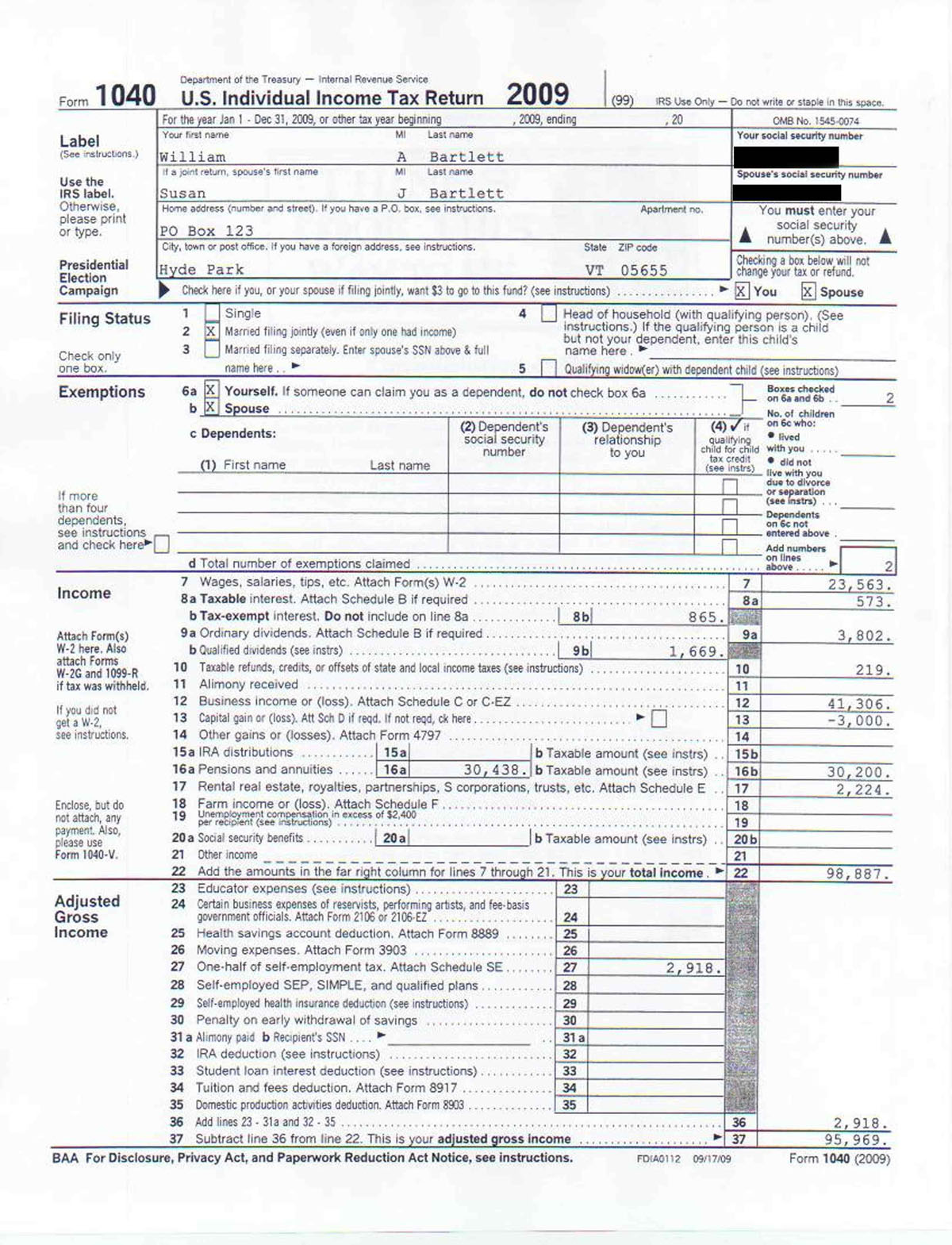
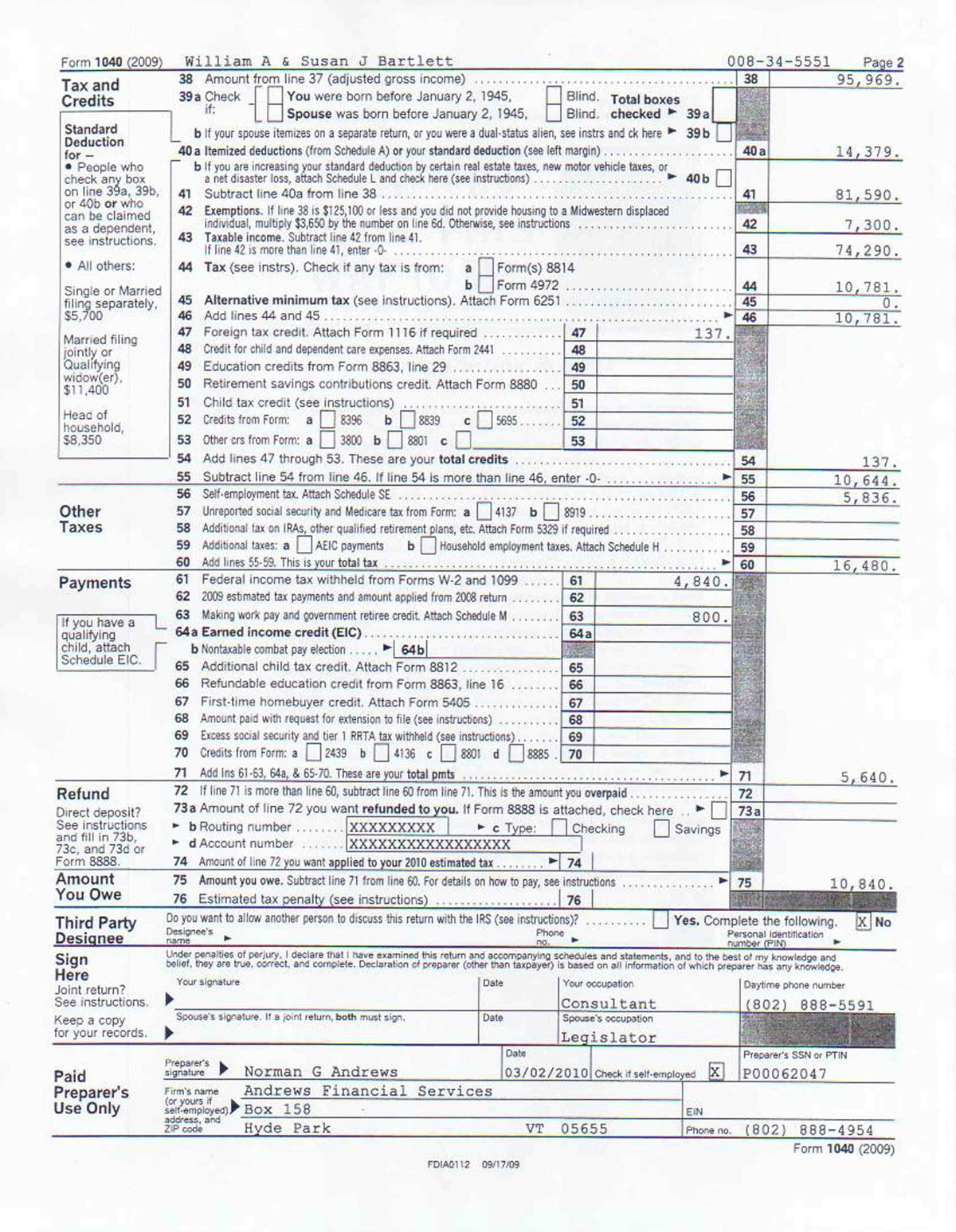
Deb Markowitz released her tax return last week, and Susan Bartlett quickly followed. No word from the other campaigns yet. Markowitz’s can be viewed here and Bartlett’s here and here.

Matt Dunne has seen the opportunity presented by the “Challenges for Change” dynamic to join Markowitz as an outsider and begin running against the Legislature and the Douglas-Dubie administration. From his press release last week, targeting the secretive, fast-tracked budget program:

“I know that to be successful – to make positive change happen – it is essential to engage stakeholders in the process, identify clear goals and then move toward[] solutions together. That is the Vermont way.

Not only have they ignored this basic management approach, this administration has ignored recommendations that could reduce costs without cutting core services.”

Doug Racine has managed to distance himself from the worst of the “Challenges” dynamic, but more significantly has been shoring up much of the left through his health care initiatives and his close association on the issue with the Vermont Workers Center. Rarely an email on the topic does not emerge from the VWC that does not reference Racine. If labor unions do endorse this primary, Racine could well stand to benefit the most.

GMD wonders, though, when Racine’s campaign will hire a campaign manager. Amy Shollenberger’s title is “Field Director,” although at least for now, she’s fulfilling the function of campaign director.

Shay Totten’s primary analysis of which campaign has momentum and which doesn’t seems consistent with most opinions, but at the same time it clearly represents a snapshot of this late-session period. It also echoes the comfortable, conventional wisdom “Dubie’s to lose” mantra, despite the fact that this isn’t backed up by the polls, which suggest a tight race.

Positioning at this stage is important, but it must be noted that in such a small state, all bets could well be off once we move into the post-session timeframe, particularly if there is a special session to review “Challenges” cuts made by the Governor.

The Challenges bill at this point has the potential to be the Vermont economic equivalent of the federal “Authorization for the Use of Military Force” that seemed to give former President Bush a blank check to do as he pleased militarily. A special session, along with providing some necessary counter to the budgetary blank check being offered to Douglas, will prove an extremely political arena that even Brian Dubie will be hard pressed to avoid.

(NOTE: Diaries posted under the GMD user represent collaborative efforts of multiple admins.)

Fast Food Insurance

A new study (here and here) highlights the extent to which life and health insurance companies are invested in the fast food industry. Even as the recent health care bill increases, by mandates the number of people covered by private health care,U.S.,Canadian and European-based insurance firms own nearly $2 billion in fast food stocks. The study points out that fast food can be consumed responsibly but that consumption is linked to obesity, cardiovascular disease and some childhood health issues.  

These are for profit companies so what would you expect? It’s sort of a life insurance profitability hedge fund perhaps.

The researchers, affiliated with Physicians for a National Health Program say this highlights the conflicts that may exist between maximizing profit and the expanding public health role of private health insurers. They state: “If insurers are to play a greater part in the health care delivery system they ought to be held to a higher standard of corporate responsibility."

U.S.-based Northwestern Mutual and Massachusetts Mutual Life Insurance Company both offer life insurance as well as disability and long-term care insurance. Northwestern Mutual owns $422.2 million of fast-food stock, with $318.1 million of McDonald's. Mass Mutual owns $366.5 million of fast-food stock, including $267.2 in McDonald's.

New Jersey-based Prudential Financial Inc. sells life insurance and long-term disability coverage. With total fast-food holdings of $355.5 million, Prudential Financial owns $197.2 of stock in McDonald's and also has significant stakes in Burger King, Jack-in-the-Box, and Yum! Brands (owner of Pizza Hut, KFC and Taco Bell) stock.