Due to timing and circumstances, we were unable to hold another online debate between the Democratic Primary candidates for Lieutenant Governor, former Representative Tom Costello and businessman Nate Freeman. Instead, we sent each candidate a series of questions to which the candidates responded. The questions and their answers appear below the fold.
I encourage readers to send the link around to non-readers, as there simply hasn’t been much of an opportunity to learn about these candidates’ stances on issues (Note: Mark Johnson emails to remind us that one of the few opportunities to get a sense of the candidates was on his radio show last week. Here’s a link to the podcasts. Be careful, some of the links are a little wonky on the page, but the mp3 is there.). And if the new media exists for any purpose, its to dig into these issues further than the traditional media allows for.
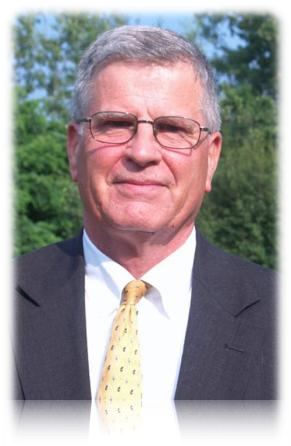
GMD: Given that the Douglas/Dubie administration has avoided facing the challenges of Vermonters’ critical energy needs, how do you see Vermont’s energy infrastructure changing in the next decade? How would you like to influence that infrastructure?
TC: The key to changing Vermont’s energy infrastructure is the appointment of a knowledgeable commissioner of the Department of Public Service who is fully committed to an energy future based on renewables which will serve the best environmental and economic interest of individual Vermonters and Vermont businesses; and the vigorous pursuit by that Commissioner of this goal. The commissioner’s responsibility in part is to plan for Vermont’s utility future. This responsibility arose in the passage of the Public Service Board reorganization bill in the late seventies which I wrote and was responsible for passing. As Lieutenant Governor, I intend to ensure that the commissioner plans wisely and competently for renewable, clean energy that will benefit all Vermonters without raising their costs.
Clean alternative energy will play an increasingly larger role in Vermont’s energy infrastructure in the coming years. With the proper leadership, renewable energy infrastructure development will create economic opportunities and benefits for Vermont. While it is essential to promote this long-term vision of Vermont’s energy infrastructure, we must also provide immediate assistance for our seniors who are adversely impacted by the rapidly rising costs of heating oil and other expenditures. As Lieutenant Governor, I will seek to provide immediate relief for these Vermonters through the creation of a Vermont Senior Lien Option (VSLO). This program will have no adverse impact on the State’s finances since any payments by the State will result in a lien on the property which will be repaid in full with interest when the elder sells the property, moves out of the property, or passes away. The program gives seniors the option of deferring property tax payments to ensure that they can afford heating oil and other basic necessities that all Vermonters deserve to have.
GMD: How much value do you place in local economy and the “buy local” movements?
TC: The Buy Local movement for Vermont agriculture and the “Vermont First” campaign to support local commerce are exceedingly valuable to local agriculture and our downtowns. Vermonters stand behind our local downtown businesses and are excited about the rapid development of local markets for agriculture-from the Community Supported Agriculture farms, to expanded farmer’s markets, to new on-farm marketing and the expansion of school and institutional purchasing from local vendors. These are significant strides forward and are supported by dynamic groups of dedicated community members in towns throughout the state-they deserve commendation.
It is critically important, however, that we also recognize that we can’t drop out of the regional, or global economy. It’s not an either/or. As a state we export dollars for energy, products and basic services. Finding ways for import substitution, especially in generating more clean energy in Vermont, are crucial to our future economic success, but we also need to have a dynamic export economy to balance our imports today and in the future-we can’t have dollars just flowing out of state! And we have major industries-dairy and other parts of agriculture, forest products, environmental products, software, etc-that can produce much more than we can consume at home.
We need to avoid pitting one part of Vermont’s economy against another-but support the dynamism between sectors.
So we need to be sure that as we support ‘buy local’ in Vermont, we balance that with support for businesses that are income generators to the state, and that also support the strong and diverse agricultural sector, and bring dollars into the state that can cycle in local commerce.
GMD: The Douglas/Dubie administration considers multinational corporations with minimal connections to Vermont to be a local business. What do you consider to be a Vermont business and as lieutenant governor, would you be willing to ensure that most of the services purchased with your budget will be provided through companies and individuals who are based in Vermont?
TC: I think most Vermonters recognize the difference. Vermont should be diligent, aggressive, and creative in supporting its indigenous industry with its purchasing power. We need to lead. That means when we build interstate rest areas, we use and showcase VT forest products that tell our story, not southern pine. When we look at our telecommunications contracts, we use the leverage of our purchasing power-we are anchor tenants for these services throughout the state-we demand expansion of public access as part of the deal. We need to, first off, be conscious about how our leverage can help develop strategic industry for the future. For example, could the state be a leader in the development of solar power in VT by building contracts toward the development of solar electric and water heating systems for public buildings in VT and thereby spur the profitability of an industry that we would like to expand, and use as an attraction for other green enterprises?
We can’t make all our purchases based on location, but we should use buy local as a key guiding principle, to be balanced by realistic assessment of the needs and costs to the state.
GMD: At press conferences, the Douglas/Dubie administration does not respect the interests of Vermonters to inform themselves about State government through citizen generated media. Will you make yourself available to citizen generated media if elected?
TC: I believe that an essential component of Democracy is media that is objective, accessible, and varied. Modern technology has allowed the citizenry to participate in this process at a level that was previously unimagined. This “citizen media” plays an important part in the distribution of information to Vermonters and it encourages all Vermonters to inform themselves and take an active role in the direction Vermont is headed. I intend to support citizen-generated media and make myself accessible. This interview is a reflection of this commitment.
GMD: This year the legislature passed and Governor Douglas vetoed a bill to assure that Entergy Nuclear Vermont Yankee’s Decommissioning Fund was fully funded. The fund is currently short at least $500,000,000, which is more than $750 for every Vermonter. Do you believe that we should seek assurances from Entergy that its Vermont Yankee nuclear power plant decommissioning fund be fully funded or do you believe that this is an issue that Vermont’s taxpayers or energy users should absorb?
TC: I believe that we must have assurances from Entergy that its Vermont Yankee nuclear power plant decommissioning fund is fully funded. Entergy Nuclear has profited off of the operation of the plant, and has an obligation to set aside adequate funds to decommission the plant. I do not believe that Vermont taxpayers should shoulder the cost to shut down the facility, dispose of the waste and clean up the site.
GMD: Do you believe Entergy Nuclear Vermont Yankee should be relicensed to run for another 20 years? Why or why not?
TC: I have a proven track record of tackling difficult energy issues in an open-mind, fair, and judicious manner; and solving these issues and taking decisive and constructive action. While serving in the Vermont House of Representatives I chaired the Utility Restructuring Committee responsible for keeping Enron out of Vermont, and saving the state millions of dollars; I was the Chairman of the Conference Committee which was the foundation for the passage of the bill reorganizing the Public Service Board.
Whether or not Vermont Yankee should be relicensed is another issue that I believe must be handled with an open-mind in a fair and judicious manner. The relicensing of Vermont Yankee requires a legislative act. Currently, several independent reviews are being conducted before lawmakers take up the issue of whether or not to grant Entergy permission to operate past the plant’s scheduled closing in 2012. There is a three-member panel in charge of overseeing an inspection report of Vermont Yankee, and nuclear technology experts have been hired by the legislature to review several complex issues. In addition, Entergy must receive a certificate from the Public Services Board, a quasi-judicial body, in order to continue operation of the plant. It is the Legislature’s duty to take into account each of these separate reviews before voting on the issue.
It is my belief that in order for Vermont Yankee to be relicensed, Entergy Nuclear must clearly demonstrate 1) that they have the ability to operate the plant safely for another twenty years, 2) that they have fully funded the decommissioning fund, and 3) that they have a safe strategic plan for disposing of the radioactive material. As of this time, Entergy has failed to demonstrate its compliance with these elements. If Entergy Nuclear after a full and fair opportunity to be heard fails to satisfy any of these three criteria, Vermont Yankee should not be relicensed to operate for another twenty years.
GMD: Do you believe property taxes should continue to be used to fund education? If not, what do you think may be a more appropriate alternative?
TC: I believe that property taxes are an appropriate source of funding for education. The income sensitivity features provide a measure of equity in the system. Vermont has no capacity at this time to impose more taxes. We need federal assistance to discharge our responsibilities to our children and to provide them with the opportunities they deserve. This assistance is especially crucial in early education and in special education. The executive must be capable and committed to securing this necessary federal assistance.
GMD: Under Lt. Governor Dubie, the Lt. Governor’s office is mostly empty and it has been a largely symbolic position. Please share with our readers how you envision your role as Lt. Governor.
TC: As Lieutenant Governor, I will be a participant in the Administration and ensure that the Legislature and the Administration work together and achieve the compromises necessary to serve the best interests of Vermonters. I believe that a citizen, part-time legislature has been and will be in the best interests of Vermonters and similarly that a full time, year-round Lieutenant Governor is not in Vermont’s best interest. However, I intend to make the role of Lieutenant Governor one of full-time leadership.
GMD: Crime and education are major issues facing Vermont. It costs almost $70,000 per year to incarcerate a female prisoner and almost $50,000 per year to incarcerate a male prisoner. Recent studies have shown that many offenders are academically challenged and often cannot read above grade school level and also cannot perform necessary basic math skills. Do you see these situations as related, and if so, how would that affect your approach to our corrections system?
TC: I believe that there is a clear link between lack of early education, care, and opportunity for children with criminal activity, unproductive behavior, and anti-social conduct of teenagers. I believe that the Lieutenant Governor should take the lead in advocating for more investment in early childhood education and child health care. Money spent now in these areas will reduce the money we spend in the future on health care, criminal justice, and education costs and will reduce the state’s crime rate in the long run.
GMD: Given the recent tragic events, please explain in detail your approach to the problem of child sexual predation, and how the state should be protecting Vermont children from predators.
TC: The safety of our children is the most important duty of the family, the community, and government.
Prosecutors are the conscience of our communities and they need to be given the tools to more effectively protect Vermont children. To that end, I support the following three proposals that will allow them to better protect our children from sexual predators:
1. Jessica’s Law: I support the establishment of minimum-mandatory sentencing for those who are convicted after a full and fair trial of aggravated sexual assault against young children.
2. Civil Confinement: I support a civil confinement system that will allow, after a judicial determination, the state to hold those predators who are shown as likely to re-offend and are demonstrably, after a full and fair trial, to be a present and future risk of harm to children.
3. Fully Funded Special Investigation Units in every county: In order to more effectively prosecute child sex offenders the police need the tools to complete thorough investigations on every alleged child sex assault. These investigations need to be completed by officers who have been specially trained in this area and are free to concentrate all their efforts at combating this scourge. To that end, I would fight for fully funded special investigation units in every county of our state. We have seen the success that SIU’s have had in Chittenden County at building strong cases against offenders. It is time to export this success to other counties for the protection of all our state’s children.
We have also seen a number of Vermont communities pass “residency restriction” ordinances that limit the areas into which convicted sex offenders may move upon their release from prison. I believe that these ordinances are a legitimate reaction to the lack of action on this area from Montpelier, and the lack of leadership on this issue from our current executives. My expectation is that the Senate Judiciary Committee and its leader, Senator Dick Sears, will make the proposals to address this issue on a statewide basis along with other proposals to enable the State to more fully discharge its responsibilities to our children.
An unfortunate and deplorable consequence of the Randolph tragedy was the conduct of our Lieutenant Governor who called for a special legislative session (which apparently he now recognizes as an imprudent, hasty, and ill-considered reaction to the tragedy), who calls for castration and capital punishment (which I believe is contrary to the beliefs of Vermonters, unproductive, dangerous, and unnecessary), and instead of engaging in a thoughtful and critical analysis has sought to use this tragedy for his own political advantage. I believe that the engagement of the Senate Judiciary Committee in its thoughtful, constructive, and thorough analysis of our laws on the subject is the proper course and I await the report of that Committee to more fully form my understanding of the issues and proposals for reducing the risk of sexual predators and protecting our children. |
|
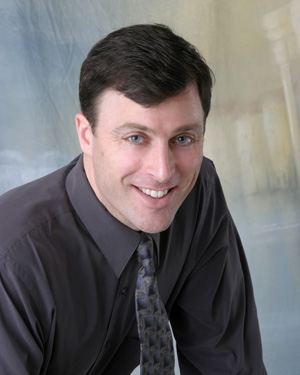
GMD: Given that the Douglas/Dubie administration has avoided facing the challenges of Vermonters’ critical energy needs, how do you see Vermont’s energy infrastructure changing in the next decade? How would you like to influence that infrastructure?
NF: Vermont’s energy future remains in the hands of Vermont voters and their vote this year will determine the direction in which we will proceed. If we continue with the current administration, we will have too many eggs in our energy basket with one-third of our electricity deriving from an unsafe, unreliable source in Entergy Nuclear Vermont Yankee. We will also experience more lost opportunities to diversify, support and purchase clean, reliable and localized sources of power.
My proposal to create a Vermont Department of Energy will, if implemented, will provide a comprehensive approach to our use of energy in it’s various forms. It will also provide opportunities to audit, assess, and recommend conservation measures withing state government.
An initial phase in the creation of a Department will take place through organizational development in a manner that will not necessitate a substantial burden on our budget. This can be accomplished by shifting current departments and divisions into the Department of Energy from their current positions in other agencies. Specific examples include:
1. Renewables and Efficiency Divisions from the Department of Public Service;
2. Public Transit and Passenger Rail from the Agency of Transportation
3. LIHEAP and Emergency Fuels from the Department of Children and Families.
The greatest challenge for this kind of organizational development will be change management. How do we resolve inevitable turf battles within agencies and departments who will lose annual budget distributions? How do we create an effective matrix of communication between these traditionally disparate groups of career professionals? How do we preserve the confidentiality of LIHEAP and Emergency Fuels recipients as necessary information is shared between the Angency of Human Services and a Department of Energy?
A Department of Energy will have responsilbilities and a mandate to facilitate and oversee the way energy is produced, supplied and conserved here in Vermont. We can look to the current responsibilities of the California Commission on Energy created in 1974 as we create our own DOE here in Vermont. We can expect a Vermont DOE to accomplish the following within 5 to 10 years from it’s date of creation:
Planning and Data
1. Annually review and update a home-heating energy emergency plan.
2. Provide for independent safety audits at locations of energy production
3. Forecast future energy needs and keep historical energy data.
4.Annually review and update a home-heating energy emergency plan.
5. Plan for and direct state response to energy emergencies.
Commercial and Residential Electricity
1. Diversify electrical energy portfolio so that no single source of power exceeds 15% of statewide use.
2. Increase the percentage of electrical energy portfolio to maximize the use of renewables with a goal to reach 95% use of renewables in 10-15 years.
3. Set ambitious annual conservation goals to reduce the demand for energy statewide with an immediate goal to achieve a 20% conservation.
4. Provide for independent safety audits at locations of energy production
Transportation Fuels
1. Create a public DMU passenger rail system serving Vermont’s 2. highest commuter routes.
3. Expand and subsidize passenger bus transportation including commuter and non-commuter runs.
Review Vermont’s 65 mph statewide speed limit.
Commercial and Residential Heating
1. Increase tax incentives and funding for qualified weatherization projects.
2. Coordiante weatherization projects for recipients of LIHEAP and Emergency Fuels.
3. Lobby for commercial heating efficiency standards.
GMD: How much value do your place in the local economy and the “buy local” movements?
NF: As one who makes a living within our local economy in my upholstery business I depend on the continual flow of customers within a 45 to 60 minute driving radius. In fact, my business has grown since January of 2008 as people who in the market for new furniture are beginning to recognize that they will spend more money over a 20 year period purchasing low-quality furniture from the global marketplace than they will reupholstering standard quality furniture already in their home. As a business owner I am extremely fortunate in that the service I provide cannot be outsourced nor does it compete in the downward spiral of the global new furniture manufacturing marketplace.
Of course, the most prominent movement in the local economy marketplace appears to be led by Vermont LocalVore. This effort seems to be a conscious extension from the rise of weekly Farmer’s Markets, Community Supported Agriculture agreements and advocacy by Rural Vermont over the last 20 years. The Vermont LocalVore challenge is the beginning of a conscious movement and is tracked on a town-to-town basis with the communities of Warren, Waitsfield and Montpelier currently leading the pack. There are two reasons to support this kind of effort in a conscious manner. From an economic perspective, many Vermonters are mindful of the importance of local farms, while from a health or culinary perspective we appreciate the nutritional value, safety and taste of fresh fruits, vegetables, meats, dairy and grains. However, our local food economy has not yet acheived a cost level allowing Vermonters in lower economic brackets to enjoy on a daily basis. The good news is that measures can been taken to support our local farmers economically as food prices rise for everyone. One example is a hearing in the State House from the Vermont Milk Commission scheduled for Tuesday, September 9th (don’t forget to vote if you attend). The VMCs proposal is intended to return to Vermont dairy farms a portion of the profit margins on milk sold in the major grocery chains. If you’ve been wondering where the money goes when you pay $5 for a gallon of milk you can rest assured that Vermont’s dairy farms are not seeing a significant rise in their income from the sale of liquid milk.
Because Vermont’s population is small our economy will rely for some time to come on the export of goods and services as we have seen over the last 25 years. However, the revenues derived from our export economy can be directed via employment wages and large-scale buying programs toward the support of local economies especially in our efforts to support local farms. The outcome from such efforts will include a healthier population and more vibrant communities.
GMD: The Douglas/Dubie administration considers multinational corporations with minimal connections to Vermont to be a local business. What do you consider to be a Vermont business and as lieutenant governor, would you be willing to ensure that most of the services purchased with your budget will be provided through companies and individuals who are based in Vermont?
NF: First, a caveat regarding the last question about the budget of the Lieutenant Governor’s office: it’s my understanding that this budget is quite minimal, allowing for a half-time salary and a full-time secretary if my information is correct. That being said, I will commit to maximizing local spending even if that means the purchase of the same types of office supplies at a locally owned store vs. a national chain.
In my view, a local business is owned and operated by a Vermonter, by which I mean any person who has lived here for seven days or whose family goes back seven generations. A local business is located here because the owner wants to be in Vermont and values our state for one reason or another. In my opinion the size or origin of the company is less important than the commitment of ownership to our state. Approximately 30 of the top 50 employers in our state are Vermont businesses including hospitals and universities. The vast majority of Vermont businesses are much smaller in scale including home-based businesses such as I own myself.
Every year, Vermont Business Magazine celebrates Vermont companies in it’s 5x5x5 Growth Awards, and as one who follows Vermont’s economy I find VBM an invaluable resource in tracking the success of local businesses from technology to agriculture. In the 2008/2008 Book of Lists you can discover the Top 100 employers, Vermont’s CSAs adn Farmer’s Markets, and local Chambers of Commerce and Trade Associations and a plethora of business data. And of course, VBM is a local company, too.
GMD: At press conferences, the Douglas/Dubie administration does not respect the interests of Vermonters to inform themselves about State government through citizen generated media. Will you make yourself available to citizen generated media if elected?
NF: Not only will I make myself available to citizen generated media, I will continue to read and participate in the Green Mountain Daily forum as much as possible. Why give up a good thing? In addition to my participation here, I have volunteered in the past for two different public access stations, free-lanced for the local paper from time-to-time years ago, and then, there was that Taylor St. Bridge video…. I have a firm belief in transparency when it comes to public interest in government. Send an email, set up a vlog or ask for an interview and I’ll be there for you.
GMD: This year the legislature passed and Governor Douglas vetoed a bill to assure that Entergy Nuclear Vermont Yankee’s Decommissioning Fund was fully funded. The fund is currently short at least $500,000,000, which is more than $750 for every Vermonter. Do you believe that we should seek assurances from Entergy that its Vermont Yankee nuclear power plant decommissioning fund be fully funded or do you believe that this is an issue that Vermont’s taxpayers or energy users should absorb?
NF: Now that the Federal government has approved Entergy’s proposal to spin off it’s responsibility for decommissioning to it’s underfunded shell company, Enexus, this problem becomes even more complicated. Unfortunately, corportate assurances at this scale of enterprise cannot guarantee the outcome we desire and all too often American taxpayers private investors suffer significant losses in corporate bail-outs. Such bail-outs occur even when the company has practiced very risky, unethcial or even illegal activities. The amount of money lost during the fall of Enron, the 1980’s Savings & Loan scandal, and the 1998 rescue of hedge fund, Long Term Capital Management, and of course, today’s mortgage crisis.
Because Entergy has signaled that it is not committed to its responsibility to decommission it’s nuclear facilities, I feel that Vermont can not rely on “assurances” and therefore, as one reason among several, place Vermont Yankee at the front of the line for decommissioning funds with a decision to not renew the ENVY license.
GMD: Do you believe Entergy Nuclear Vermont Yankee should be relicensed to run for another 20 years? Why or why not?
NF: I do not support relicensing for the following reasons.
1. Safety. Vermont Yankee has had a series of significant safety issues since January 2007 with a 6 hour shutdown. Additionally, the engineering design of this particular plant, with its turbine spinning in the direction of the reactor, was long ago abandoned out of safety concerns.
2. Uncertainty. The first objection to decommissioning is framed as a question. “What is your plan to replace one-third of Vermont’s electricity?” That’s a very good question because we currently don’t have a contingency plan in place. There is no plan to replace one-third of Vermont’s electricity if Yankee experiences a permanent shut-down due to safety issues arising from it’s deteriorating construction or human error.
Given the series of events over the last 18 months including the collapse of Yankee’s cooling towers, two recent federal regulation violations related to a crane used to moveradioactive spent fuel , and human error causing an increase of radiation levels and a plant evacuation, it’s time to create a contingency plan and begin imagining life without Yankee.
GMD: Do you believe property taxes should continue to be used to fund education? If not, what do you think may be a more appropriate alternative?
NF: On the subject of property tax I would first like to point out my opposition to Mr. Costello’s proposal for a reverse-mortgage scheme referred to as a “Tax Annuity Lien Option.” This is an exotic insurance product which would liquidate the value of a home over a period of time with no guarantee that many years of deferred property taxes would be repaid. Additionally, as with any brokered insurance product, there is a significant up-front sales commission associated the annuity in the range of 5 to 6% of the value of the home. Finally, the number of circumstances in which this kind of reverse mortgage would be so rare as to qualify the proposal as legislative “boutique” issue. The information available to the general public about a “Tax Annuity Lien Option” is limited to Mr. Costello’s proposal, thus making it incredibly difficult for the average home owner to understand what they may be agreeing to should this proposal become law.
The education tax law, while constructed as an indirect income tax, is extremely complex and one of the most frustrating elements of the law for tax-wary school boards is the uncontrolable impact of the Common Level of Appraisal. Despite the fact that my local school board, of which I am a member, held our annual increase below 4%, the CLA, a statewide property value leveling mechanism, raised the rate significantly higher and therefore affected taxpayers more substantially.
This is a very complicated issue that I has no silver bullet solution. If we diversify the sources of revenue to support education, then we run the risk of “tax creep.” For example, if we propose to reduce the property tax and make up the difference with an increase in the income tax, it may only be a few years before taxpayers are once again paying property tax at the most recent high-water mark.
Lacking a current proposal of my own, I would at this point recommend any approach to changing our education tax in an incremental, evolutionary manner as described in Charles Lindblom’s 1959 Public Administration Review essay, “The Science of Muddling Through.”
GMD: Under Lt. Governor Dubie, the Lt. Governor’s office is mostly empty and it has been a largely symbolic position. Please share with our readers how you envision your role as Lt. Governor.
NF: I believe it was Madeleine May Kunin who said, loosely paraphrased, that the office of Lieutenant Governor is as big as your imagination. Of course, there are budgetary and constitutional limits in this position, however Vermont can’t afford to elect anyone to this office who is only committed to the lowest standards of responsiblity such as we have seen over the last six years.
Because of my proposal review the implementation of the Angel Investor’s Act, I would seek an appointed or ex-officio position as a Director of the Vermont Econcomic Developmnet Authority. Additionally, I would advocate for a bill to be introduced in the Senate creating a Vermont Department of Energy.
GMD: Crime and education are major issues facing Vermont. It costs almost $70,000 per year to incarcerate a female prisoner and almost $50,000 per year to incarcerate a male prisoner. Recent studies have shown that many offenders are academically challenged and often cannot read above grade school level and also cannot perform necessary basic math skills. Do you see these situations as related, and if so, how would that affect your approach to out corrections system?
NF: This is a subject that, once again, is very complicated and I would have to learn much more about it in order to respond appropriately.
GMD: Given the recent tragic events, please explain in detail your approach to the problem of child sexual predation, and how the state should be protecting Vermont children from predators.
NF: I have taken a firm position in advocating for stronger preventative measures in order to help shine the late of day into this heart of darkness. We have strong laws in place yet we have much to do in the way of education and prevention measures.
If we look back a mere year and a half in Brian Dubie’s February 17th, 2007 “log book” entry, “Taking Responsibility to Protect Vermont’s Children,” the Lieutenant Governor acknowledges the Legislature’s actions creating tougher laws against sexual predators. In the same entry, Brian Dubie acknowledges the expansion of Special Investigative Units. He even discusses preventative measures, saying, “we must help every Vermonter learn to prevent, recognize and act when they see child sexual abuse.” Ironically, Brian Dubie is very much in agreement with my position: we have tough laws in place; we need to expand our SIUs, and we need to shine the light of day into the heart of darkness in order to approach the very difficult epidemic of sexual violence against children.
Additionally, if we look back to Jim Douglas’ April 17th press release, “Vermont takes unprecedented action to prevent sexual and domestic violence,” we can see the Douglas/Dubie approach to sexual violence is to merely applaud and immediately forget the laws we have recently passed. In Douglas’ press release, dated a mere 3 months prior to the tragedy in Randolph, the governor states, “Vermont is leading the nation in developing innovative, proactive approaches to ending the epidemic of sexual and domestic violence in our state.” Additionally, the Vermont Legislature passed into law Act 174 on Domestic Violence, specifically including a provision never mentioned by either Douglas or Dubie despite a very public outcry for this measure: that prior convictions for sexual assault shall be considered a prior offense for purposes of sentencing enhancement. Instead of reassuring good Vermonters that we had just placed into law the same provisions suddenly demanded, both Brian Dubie and Jim Douglas fanned the flames of emotion and disregarded their own statements only mere months prior to this tragedy.
It is my position that, in addition to the strong laws on sexual and domestic violence both Jim Douglas and Brian Dubie have already acknowledged, we need to enact a new law that will provide for much stronger measures in the areas of education and prevention of sexual violence against all persons of every age. |